Uma Schröder · 21 September 2026
Mapping Consumer Demand Shifts in Eco-Friendly Building Materials Markets
Current Market Landscape
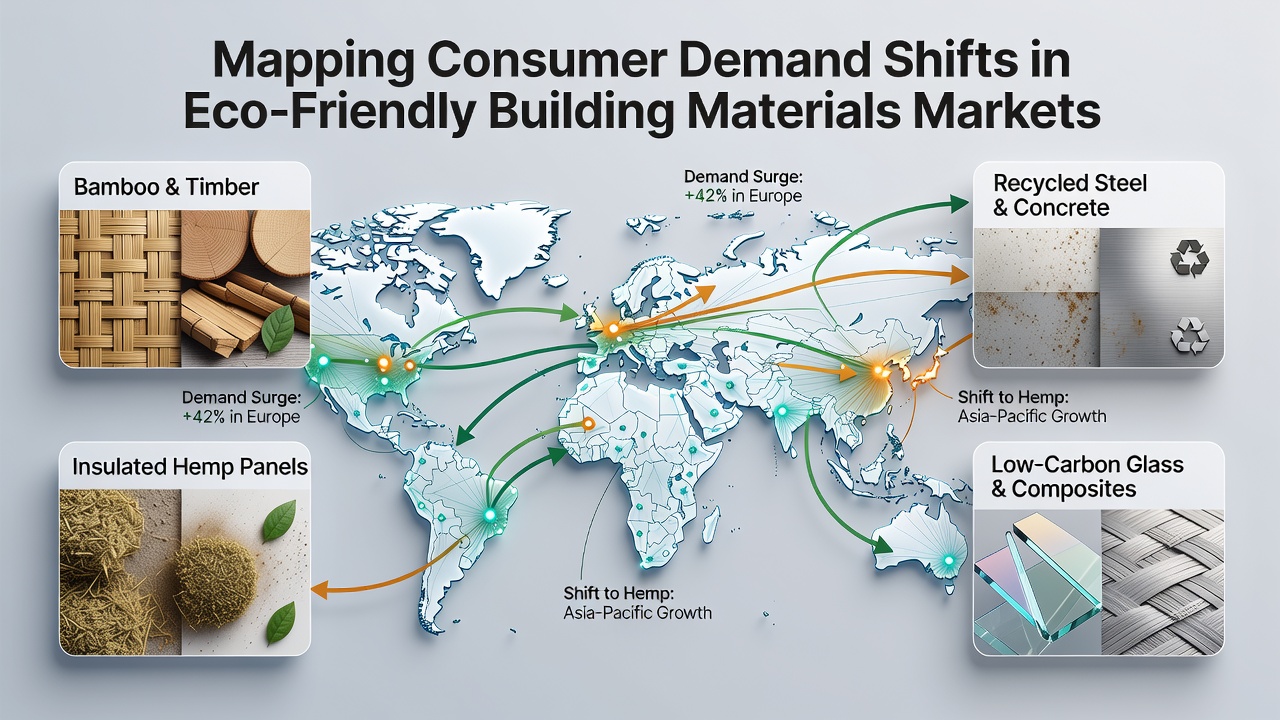
Consumer preferences in construction materials have moved toward options that reduce environmental impact, and data from industry reports show increased interest in products with verified low emissions and recycled content. Builders and developers now track supply chains more closely because regulations in multiple regions require documentation of material origins and lifecycle effects. This shift appears in both residential and commercial projects where buyers request alternatives to traditional concrete and steel whenever feasible.
Market analysts note that sales of cross-laminated timber and bamboo composites rose steadily between 2023 and 2025, while demand for conventional virgin lumber stabilized in several urban centers. Figures from government agencies indicate that European construction firms adopted these alternatives at a faster rate than those in North America during the same period, largely because of stricter carbon accounting rules that took effect earlier.
Key Drivers Behind the Changes
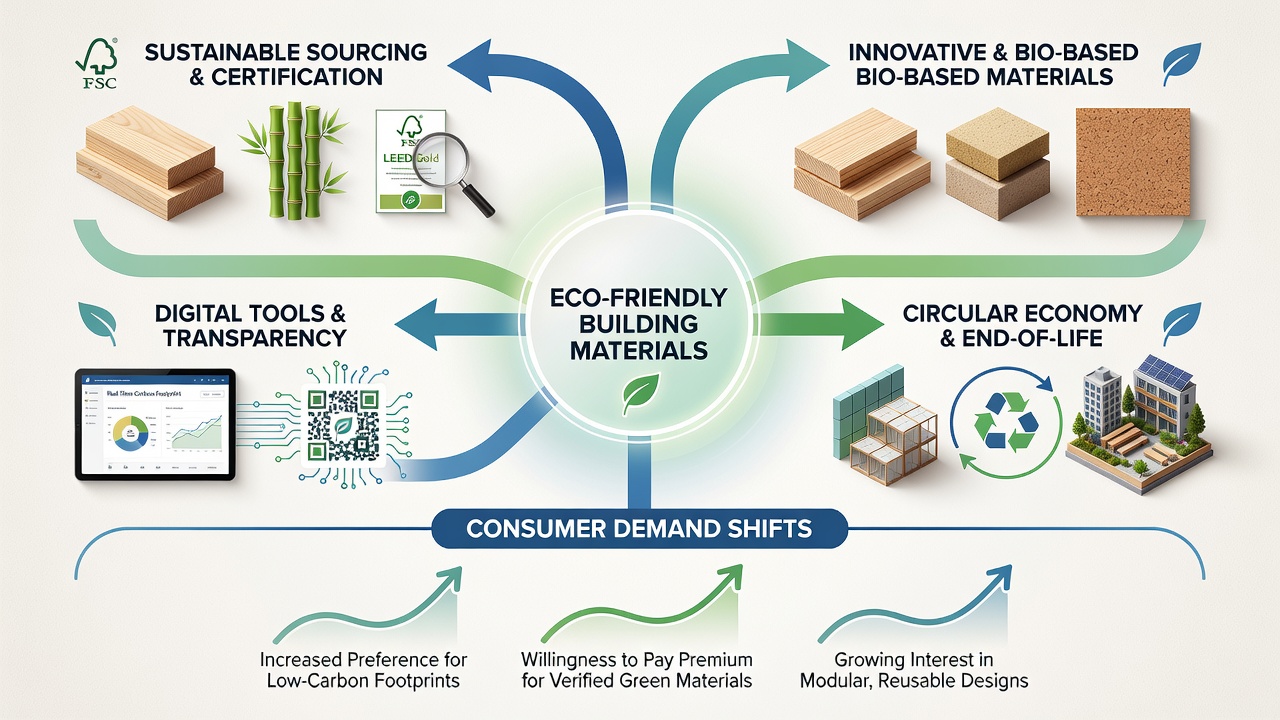
Price fluctuations in raw materials play a role, yet certification programs and consumer awareness campaigns exert stronger influence on purchasing decisions. When labels such as FSC or Cradle to Cradle appear on product specifications, project bids often favor those items even if initial costs run higher. Research compiled by academic institutions demonstrates that end-users increasingly weigh long-term energy savings against upfront expenses when selecting insulation or cladding systems.
Policy updates also accelerate the transition. In September 2026, updated reporting requirements from the European Commission will expand disclosure rules for embodied carbon in new builds, and similar measures are under review in Canadian provinces. These changes prompt manufacturers to reformulate products and publish more detailed environmental product declarations to remain competitive.
Regional Patterns and Material Preferences
Demand patterns vary by geography because local resource availability and building codes differ. Coastal areas in Australia show stronger uptake of recycled plastic lumber for decking and framing, whereas inland markets in the United States continue to rely more on engineered wood products derived from fast-growing species. Observers note that Asian markets prioritize bamboo and rice husk composites for both cost and climate reasons, with volume growth documented in trade statistics released by regional industry associations.
Supply chain disruptions experienced in 2024 prompted some contractors to source materials closer to project sites, which in turn boosted interest in regionally certified eco-options. This localization trend appears most clearly in urban redevelopment zones where transportation emissions factor into overall project scoring systems used by municipalities.
Data Trends and Measurement Approaches
Surveys conducted by research organizations reveal that over 60 percent of architects now specify at least one eco-certified material in every major project, compared with roughly 35 percent five years earlier. These numbers come from aggregated responses across design firms in the US, UK, and Germany, and they align with procurement data tracked by large developers. Tools that map real-time demand, including satellite imagery of manufacturing facilities and online search trends, help analysts forecast which products will see shortages or surpluses in coming quarters.
One study from a university research group examined bidding documents from 2022 through 2025 and found consistent growth in requests for low-VOC paints, mycelium-based insulation, and geopolymer concrete mixes. The same analysis showed that projects located near ports adopted imported green materials more readily because logistics costs remained manageable, while inland sites leaned toward domestically produced alternatives.
Challenges in Tracking Accurate Demand Signals
Fragmented data sources create difficulties for precise mapping efforts. Retail sales figures, wholesale orders, and permit applications each capture different segments of the market, and reconciling these streams requires standardized classification systems that many jurisdictions have not yet adopted. Industry groups have begun pilot programs to harmonize reporting categories, yet full implementation remains several years away according to published timelines.
Consumer surveys sometimes overstate interest in sustainable products because respondents answer in socially desirable ways. Actual purchase records from distributors provide more reliable indicators, and analysts cross-reference those records with social media mentions and search volume to build composite demand maps that reflect behavior rather than stated intentions.
Conclusion
Mapping consumer demand shifts in eco-friendly building materials markets requires combining regulatory updates, sales statistics, and regional policy differences into a coherent picture. Evidence from multiple continents shows steady movement toward certified low-impact products, driven by both rule changes and evolving project specifications. Continued refinement of data collection methods will support more accurate forecasting as markets adjust to new environmental standards expected through the remainder of the decade.